Genre: Historical Fiction (Prehistoric) with elements of Climate Fiction and Literary Fiction.
Pages: 339 pages
Published Date: March 25, 2026
Publisher: Stuart Ullman
Series: The Téuta’s Child Series
Rating: 4 out of 5
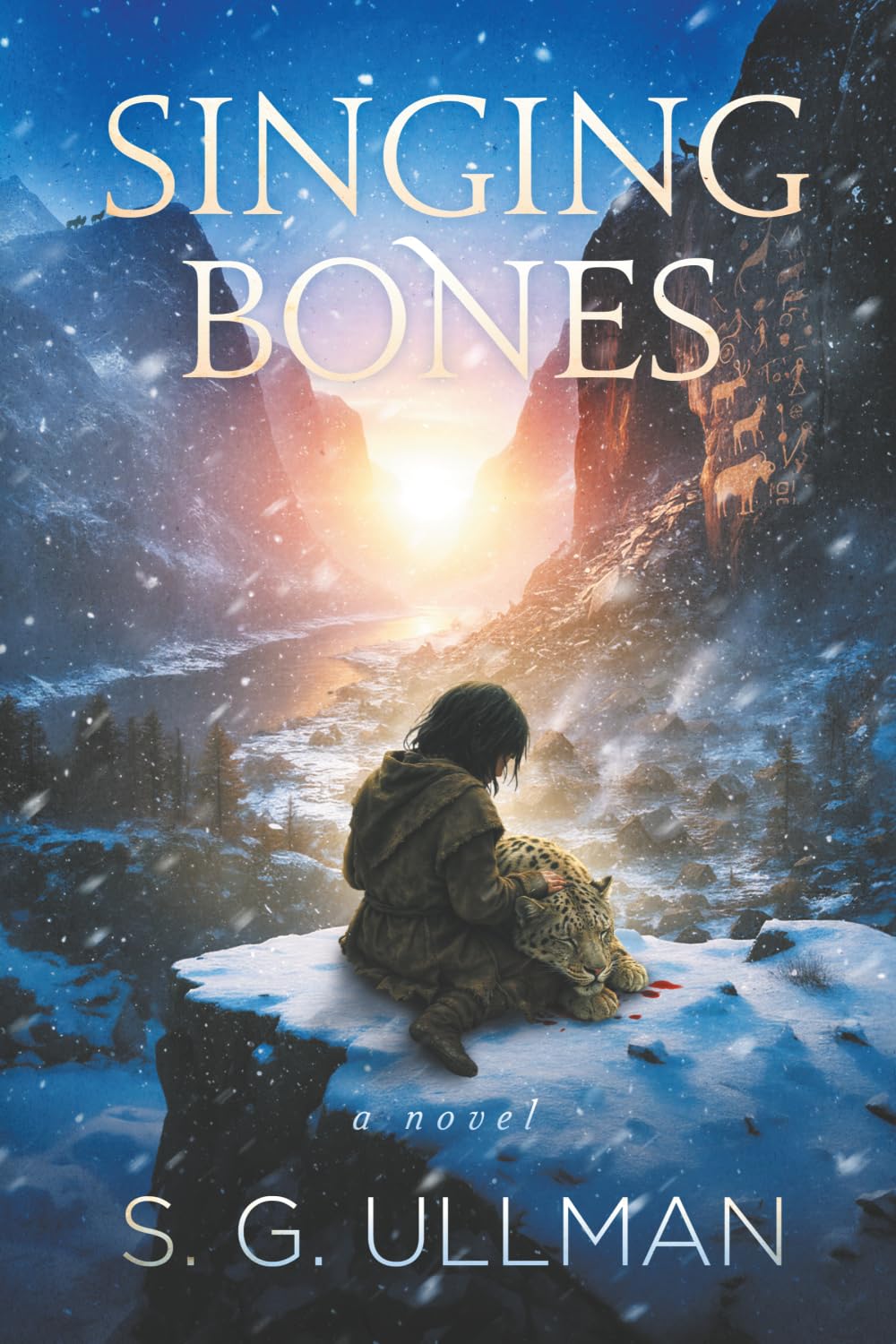
Singing Bones by S. G. Ullman is a deeply immersive work of historical fiction that transports readers to a prehistoric world shaped by uncertainty, survival, and quiet resilience. Set roughly 8000 years ago, the novel follows the Teuta people as they face environmental changes they cannot fully understand, yet cannot ignore.
At the heart of the story is Eini, a young girl who senses that something dangerous is coming long before anyone else is willing to listen. Her visions are vague and unsettling, and while her tribe adapts to shifting seasons and failing crops, they largely dismiss her warnings. This tension between intuition and denial becomes one of the novel’s strongest threads. Ullman uses Eini’s perspective to explore how communities respond to slow, creeping disaster, especially when the threat is not immediately visible.
The novel unfolds through multiple points of view, allowing readers to experience the crisis from different angles within the tribe. This structure adds depth and reinforces the sense that no single person fully understands what is happening. Instead, knowledge is fragmented, much like it would have been in a world without modern science or communication. The inclusion of characters like Prsedi and Senek adds emotional weight and variety, grounding the story in personal relationships as much as in survival.
One of the most compelling aspects of the book is its connection to a real geological event, likely tied to the collapse of an ice sheet thousands of years ago. Ullman does not present this as a dramatic, sudden catastrophe at first, but as a gradual unraveling of the familiar world. Winters grow harsher, rains become unreliable, and tensions rise both within and between groups. This slow build mirrors modern conversations about climate change, making the story feel surprisingly relevant despite its ancient setting.
The pacing is deliberate and often slow, but this works in the book’s favor. It allows readers to fully absorb the rhythms of Teuta life, their connection to the land, and the emotional difficulty of leaving behind not only a home, but generations of history and identity. The eventual displacement of the tribe carries real emotional weight because Ullman has taken the time to show what is being lost.
There are moments where the shifting perspectives or time jumps can feel slightly disorienting, especially for readers unfamiliar with the broader world introduced in The Teuta’s Child. However, the novel still functions effectively as a standalone story. The confusion, in some ways, reflects the characters’ own lack of clarity about the forces shaping their lives.
Ultimately, Singing Bones is a thoughtful and evocative exploration of survival, memory, and change. It asks readers to consider how people respond when their world begins to slip away, and what it means to carry the past forward when the future is uncertain. It is a quiet, reflective novel that lingers long after the final page, offering both a glimpse into ancient humanity and a mirror to our present moment.
Thank you to NetGalley and Stuart Ullman for providing an advance copy in exchange for an honest review.
#SingingBones #NetGalley
 Reading In My Jammies